Latest News

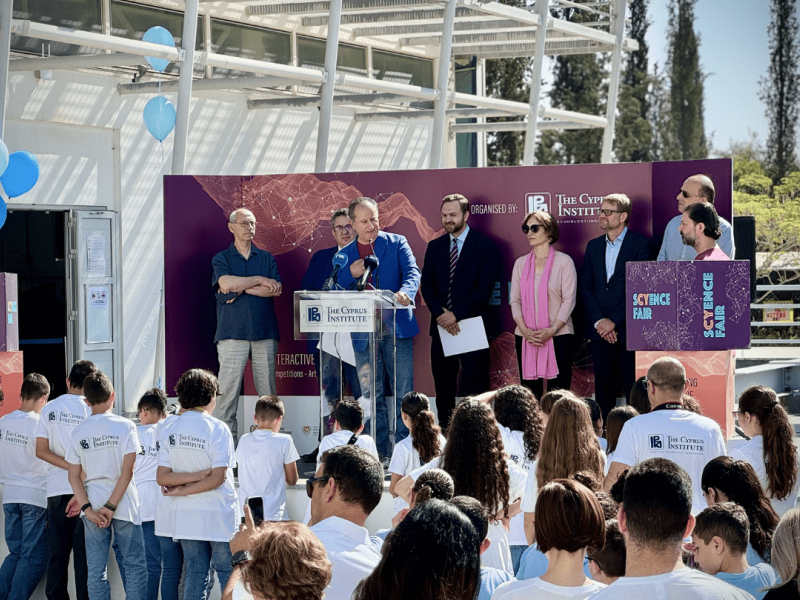
CARE-C at the 2026 sCYence Fair
CARE-C at the 2026 sCYence Fair

2026-05-06
Researchers and other CARE-C staff members of The Cyprus Institute participated in the 2026  “sCYence Fair”, org…
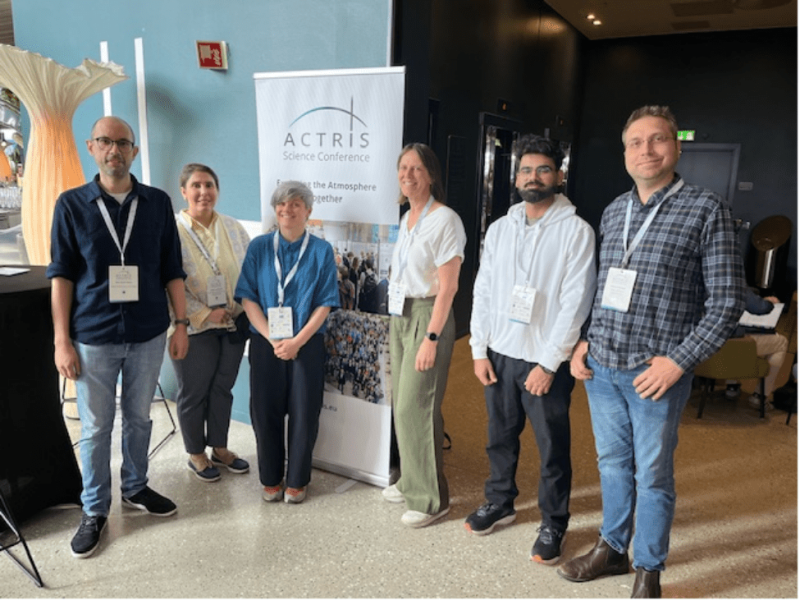
CARE-C at the ACTRIS Science Conference 2026
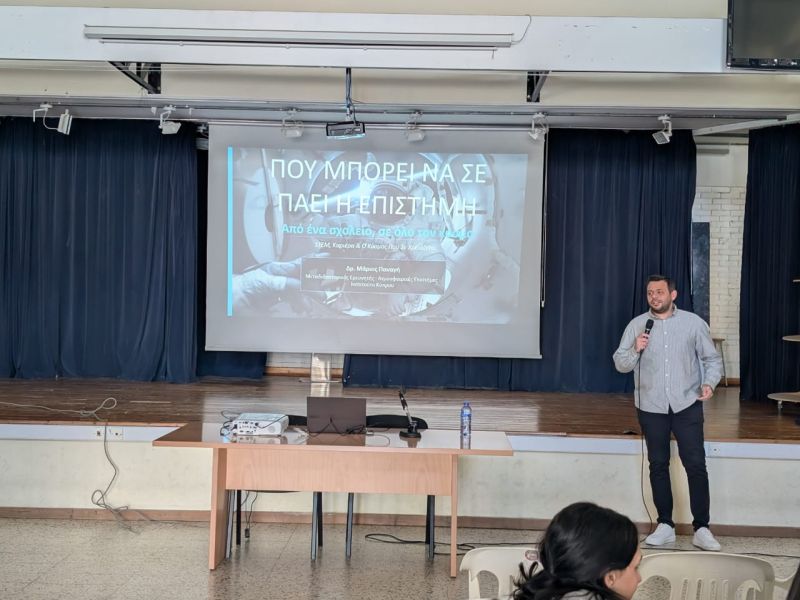
CARE-C at the ACTRIS Science Conference 2026

2026-04-29
Researchers from The Cyprus Institute’s Climate and Atmosphere Research Centre (CARE-C) actively participated in the …
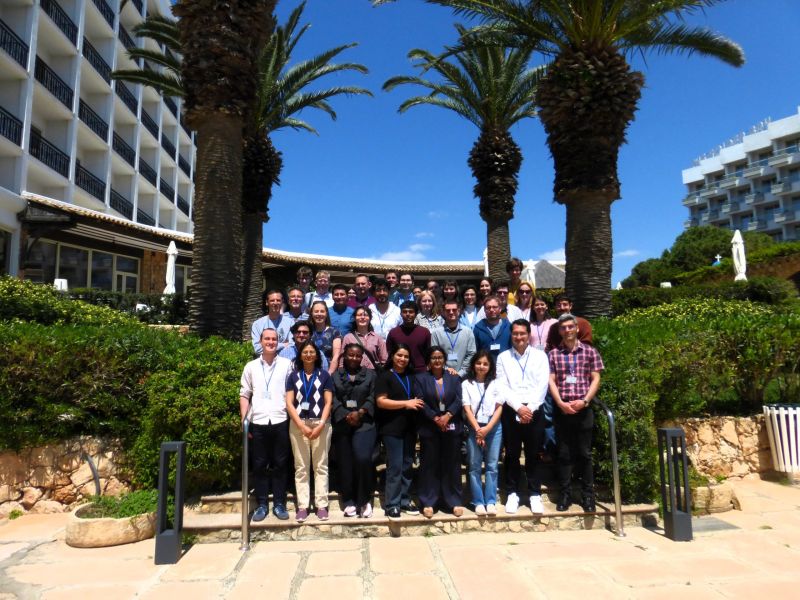
CARE-C Post-Doctoral Research Fellow Dr. Marios Panagi delivered a presentation during STEM Career Talks at Limassol High School

CARE-C Post-Doctoral Research Fellow Dr. Marios Panagi de…
2026-04-28
On the 22nd of April, CARE-C Post-Doctoral Research Fellow Dr. Marios Panagi delivered two presentations to approxima…
European Workshop on Atmospheric Dust brings together scientific experts to Cyprus 

European Workshop on Atmospheric Dust brings together sci…

2026-04-23
The European Workshop on Atmospheric Dust, hosted by the Climate and Atmosphere Research Centre (CARE-C) of the Cypru…
New study reveals how oxidized mercury behaves in the atmosphere, enabling improved understanding of environmental and health impacts

New study reveals how oxidized mercury behaves in the atm…
2026-04-22
A new international study, led by CARE-C, The Cyprus Institute, published in Nature Communications, provides the firs…
Accounting for humidity is critical for understanding heat‑related mortality in the Eastern Mediterranean, new CARE-C led study finds

Accounting for humidity is critical for understanding hea…

2026-04-20
A new study led by researchers of the Cyprus Institute’s CARE-C reveals that the combined effects of high temperature…

Events

4th Annual Workshop: Climate and Atmosphere Research & Innovation in the Eastern Mediterranean & Middle East | 26 November 2025

4th Annual Workshop: Climate and Atmosphere Research &amp…

2025-09-01
The Climate and Atmosphere Research Center (CARE-C) of the Cyprus Institute, and its Advanced Partners, are organizin…
Innovation in Atmospheric Measurement Techniques Workshop 2025

Innovation in Atmospheric Measurement Techniques Workshop…

2025-03-18
Workshop Information Abstract Submission Form Workshop …
Winter School: Advanced analysis of atmosphere-surface interactions and feedbacks (3-14 March, 2025)

Winter School: Advanced analysis of atmosphere-surface in…

2025-02-21
The Eastern Mediterranean and Middle East – Climate and Atmosphere Research Centre (EMME-CARE) project consortium, le…
10th International Society for Atmospheric Research using Remotely piloted Aircraft (ISARRA) Conference | Larnaca, Cyprus | 29 – 31  October, 2025

10th International Society for Atmospheric Research using…

2025-01-27
ISARRA is a member-based, non-profit society for all scientist doing atmospheric and earth science research and the n…
Autumn School: Drones & sensors in Atmospheric sciences (11 November – 15 November 2024)

Autumn School: Drones & sensors in Atmospheric scienc…

2024-05-13
The Cyprus Institute, Nicosia, Cyprus30 October – 3 November 2023
Innovation in Atmospheric Measurement Techniques Workshop 2024

Innovation in Atmospheric Measurement Techniques Workshop…
2024-03-15
Workshop Information Call for Abstracts Abstract Submis…

Research Highlight

Unveiling the molecular identity of oxidized mercury in the polar atmosphere

Mercury is a globally transported pollutant with significant impacts on ecosystems and human health, particularly in polar regions where bioaccumulation in marine food webs leads to elevated exposure. While atmospheric oxidation controls where mercury is deposited, the molecular identity of oxidized mercury species has remained largely unresolved due to limitations in measurement techniques.

In this study, we present the first direct, real-time observations of individual oxidized mercury compounds in the polar atmosphere using nitrate-based chemical ionization mass spectrometry (CI-APi-TOF). Measurements conducted in Antarctica and the central Arctic reveal that mercury exists predominantly as mercuric halides, with HgBr₂ identified as the dominant oxidized species in both regions.

These observations challenge current atmospheric models, which predict HgCl₂ and HOHgBr as the primary oxidized mercury forms. Instead, our results demonstrate a more complex speciation, including contributions from bromine-, chlorine-, and iodine-containing mercury compounds. The findings highlight the importance of halogen chemistry, particularly bromine, in driving mercury oxidation in polar environments.

By providing molecular-level insights into oxidized mercury, this work advances our understanding of mercury cycling and offers critical constraints for improving atmospheric chemistry models and global deposition estimates.

Newsletter

Join our mailing list

By submitting this subscription form you agree to receive news and updates about EMME-CARE and CARE-C via the email you provided, in accordance with our Privacy Policy which provides information about how we use and process your data. We use Mailchimp as our marketing platform.

By clicking subscribe, you acknowledge that your information will be transferred to Mailchimp for processing. Learn more about Mailchimp’s privacy practices here. If you change your mind, you can unsubscribe at any time by clicking the unsubscribe link in the emails you receive from us or by contacting us at communication.care-c@cyi.ac.cy