
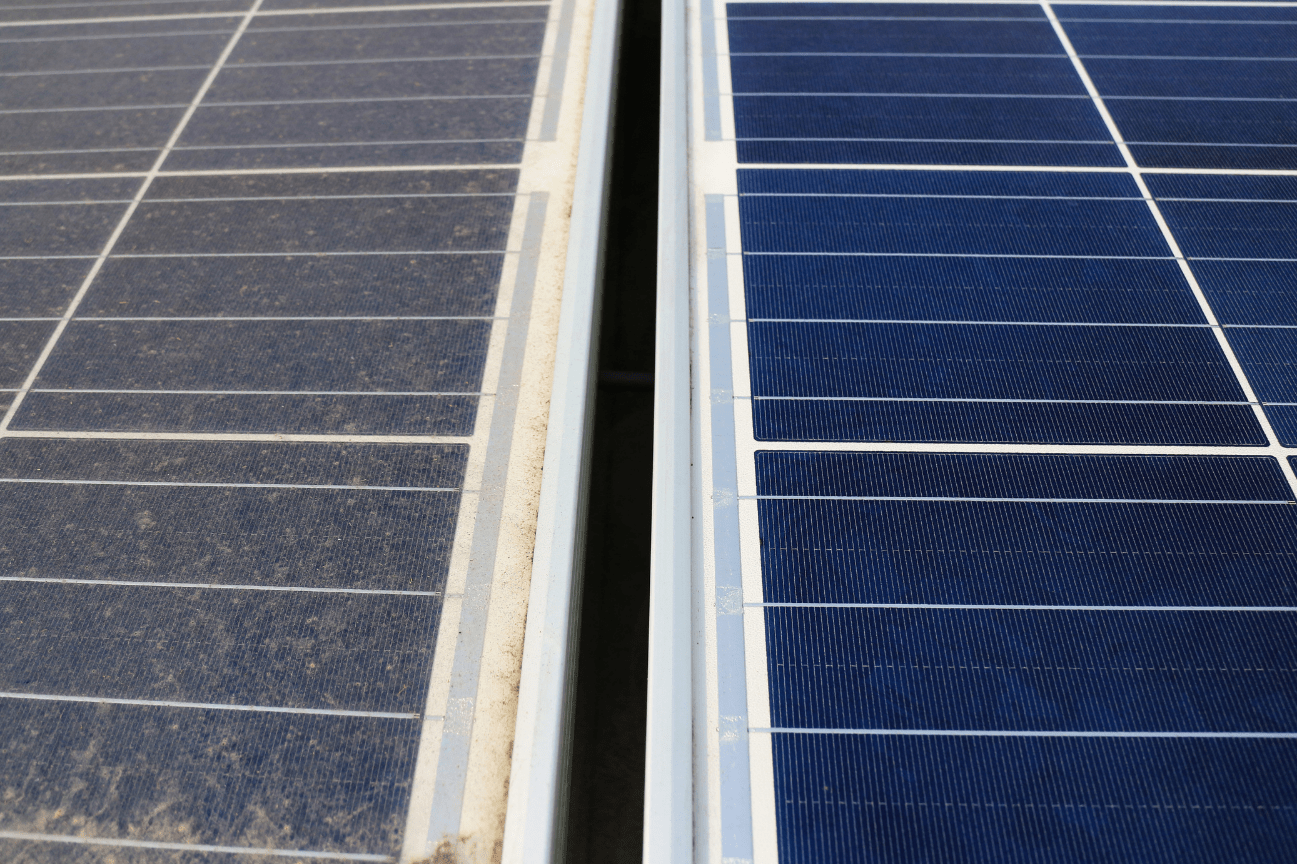
Severe dust events reduce solar energy production by more than 20%, new CyI research finds
A new scientific study found that severe dust events can reduce the sunlight reaching photovoltaic (PV) systems, and hence lower electricity production, by more than 20% on otherwise clear-sky days. The study was conducted by researchers at the Climate and Atmosphere Research Center (CARE-C) of The Cyprus Institute in collaboration with the Cyprus University of Technology and industry partners. The findings are of particular importance for Cyprus, which continues to experience increasingly frequent and intense dust episodes.
The largest losses occur during otherwise clear-sky conditions, when solar generation would normally be strong. However, during dust events, electricity output can drop sharply and unexpectedly, posing challenges for accurate forecasting and grid management.
The researchers used a newly developed machine learning approach to analyse more than 1.6 million hourly data points and PV production records from 472 solar installations across Cyprus. They were able to distinguish between the effects of clouds and mineral dust on solar radiation and identify precisely when and by how much dust storms suppress solar energy production. This information is critical for power system planning and solar forecasting in dust-prone regions.
“Dust outbreaks are among the most impactful stressors on solar energy systems in the Mediterranean,” noted study contributor Dr Theodoros Christoudias, Associate Professor at CARE-C, The Cyprus Institute. “Through this research we were able to directly quantify losses hour by hour, under real operating conditions. This improves forecasting accuracy and can help electricity system operators better prepare for sudden reductions in output and maintain grid stability.”
The research was carried out within the PV Dust project, examining the impact of atmospheric dust on energy production across the Eastern Mediterranean.
The project is funded by the European Union Recovery and Resilience Facility of the NextGenerationEU instrument, through the Cyprus Research and Innovation Foundation (COM-CONCEPT-ENERGY/0624/0159).