
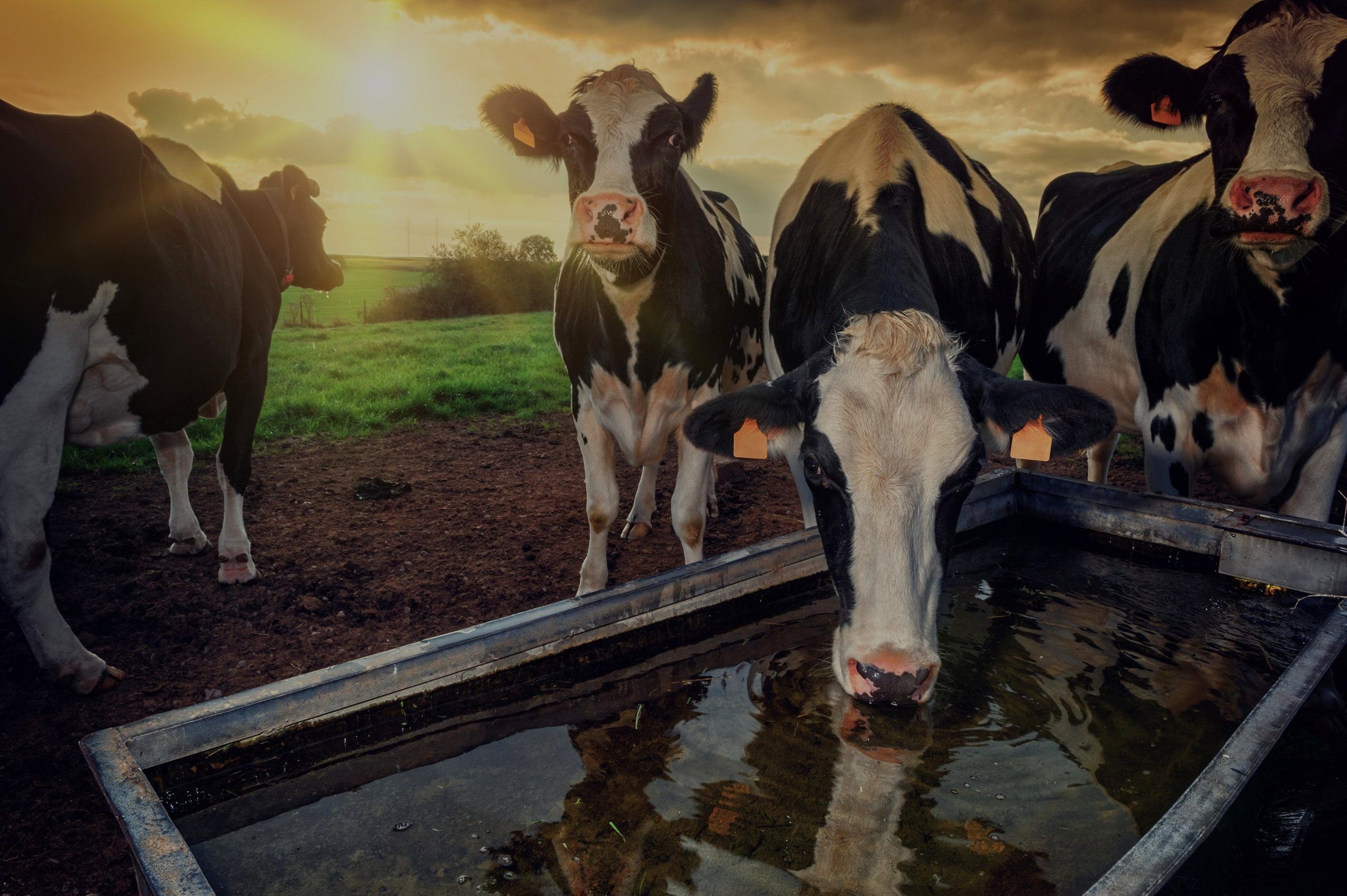
Cattle Farming at Risk as Climate Change Increases Thermal Stress
A new study led by researchers at The Cyprus Institute, with contributions from Cyprus’ Agricultural Research Institute, warns that climate change is increasing thermal stress in animals, posing a major challenge to global cattle farming. Without substantial reductions in greenhouse gas emissions, impacts are expected to become evident as early as 2050 and worsen through the end of the century, directly affecting animal productivity and survival.
Animals experience thermal stress when temperature and humidity rise above designated safe thresholds. Thermal stress increases the risk of weight loss and fertility problems in cattle, while also reducing both the quantity and quality of milk production. In extreme cases, it can even lead to death. Because cattle tolerance thresholds are comparable to, or higher than, those of other livestock, the findings suggest that goats, sheep, pigs, and poultry may also face increasing risks.
As part of the new study, published in the journal PLOS Climate, researchers used advanced machine-learning methods to more accurately estimate future cattle exposure to thermal stress under different emission scenarios. This approach presents a clearer picture of how temperature and humidity are projected to influence heat stress experienced by cattle worldwide under future climate conditions.
The findings show that periods of severe thermal stress, which were extremely rare before 2020, are expected to become increasingly common in the coming decades. Model projections indicate that such events could increase twelve-fold by the end of the century without significant emission reductions.
“Our results indicate that these trends could have serious consequences for livestock farming, dairy production, and broader food production systems globally, with implications for food security and agricultural economies,” noted Dr. Marco Neira, Associate Research Scientist at the Climate and Atmosphere Research Center of The Cyprus Institute, and lead author of the study. “The research underscores that reducing emissions and adapting livestock systems to climate change has become a global priority.”
In Cyprus, where heatwaves are already becoming more frequent and intense, this challenge is particularly relevant. Beyond basic adaptation measures such as adequate shading and animal cooling systems, researchers stress the need for longer-term, strategic solutions. Genetic improvement programmes aimed at breeding heat-tolerant animals are noted as a cost-effective and scalable option that could strengthen the resilience of the farming sector and support the continued production of high-value products, such as halloumi.
Reference
Neira M, Georgiades P, Proestos Y, Economou T, Araya J, Malas S, et al. (2026) Climate change and thermal stress in cattle: Global projections with high temporal resolution. PLOS Clim 5(1): e0000761. https://doi.org/10.1371/journal.pclm.0000761