
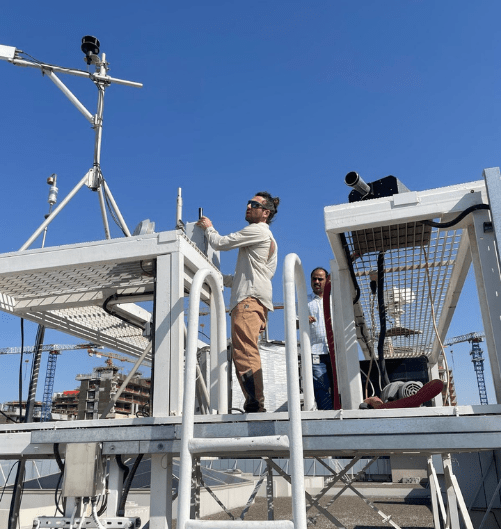
CARE-C installs new atmospheric supersite at Khalifa University in Abu Dhabi
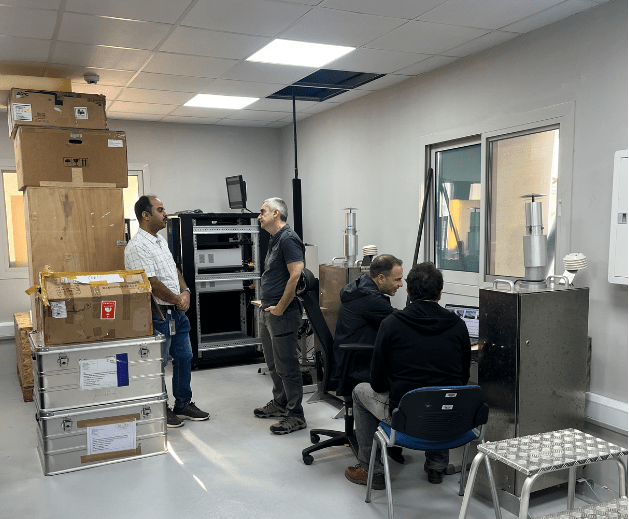
The Cyprus Institute (CARE-C) and Khalifa University are collaborating to establish a state-of-the-art atmospheric supersite in Abu Dhabi, addressing critical environmental challenges in the Gulf region.
The Gulf experiences some of the highest pollution levels globally, driven by frequent dust storms, intense urbanization, and oil and gas activities. Understanding these complex atmospheric processes is essential for improving air quality, climate predictions, and public health outcomes.
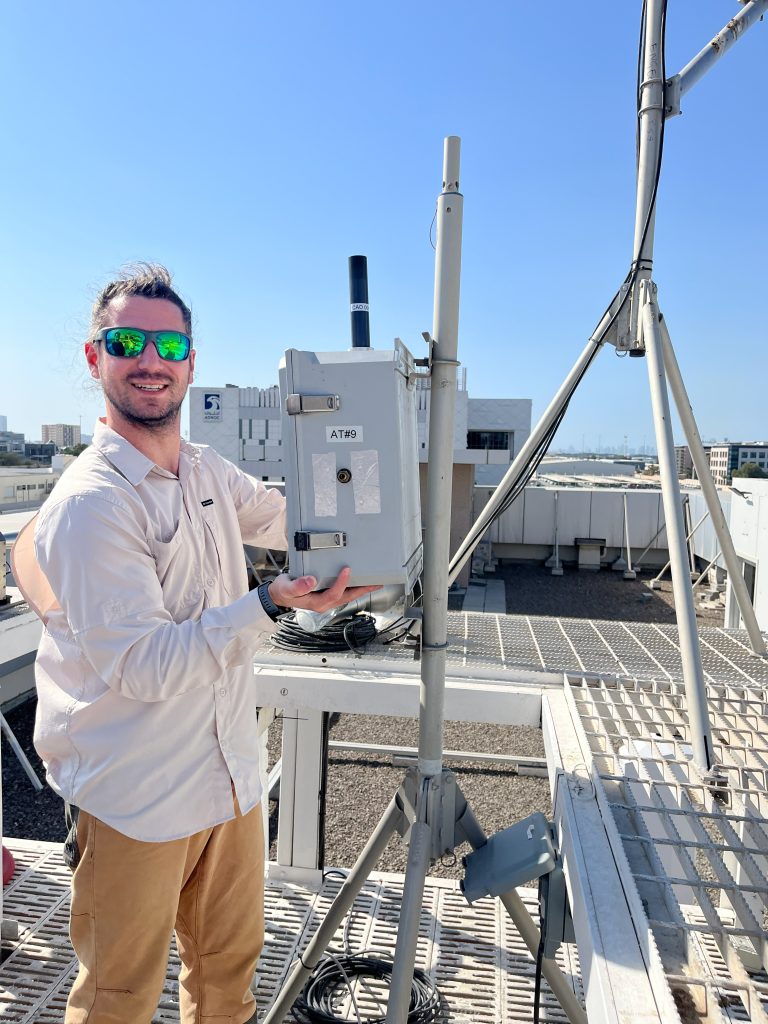
The supersite will deliver comprehensive, real-time measurements of key greenhouse gases, including CO₂, CH₄, and N₂O. It will also monitor reactive gases such as NOx and O₃, which play a major role in air pollution and atmospheric chemistry. Advanced aerosol characterization will be conducted, including PM10, chemical composition, particle size distribution, and black carbon. These observations will help track emerging pollutants and better understand their sources and impacts.
The Abu Dhabi supersite will complement an existing desert monitoring station located at 120 km distance from Abu Dhabi, operating since October 2025, and measuring regional background concentrations of greenhouse gases (CO₂ and CH₄) across the Middle East.
The initiative is part of the EMME-CARE project, aiming to enhance atmospheric observations in the EMME region. It is embedded within a joint PhD program between the two institutions, funded by the MSCA DUST-DN project, and includes deployment of the novel AEROTAPE instrument under the ANR AERODUST project. Together, these efforts mark a major step forward in advancing atmospheric research and supporting evidence-based environmental policy in the region.
This project has received funding from the European Union’s Horizon Europe Research and Innovation Programme under the Marie Skłodowska-Curie grant agreement No 101168425, as well as two national agencies: UKRI in the United Kingdom and SERI in Switzerland.

This project has received funding from the European Union’s Horizon 2020 research and innovation programme under grant agreement No. 856612 and the Cyprus Government